How to remove carpet stains (quick answer): scrape or blot up as much as you can, then blot (never rub) with a white cloth and a solution of 1 teaspoon of clear washing-up liquid in 500ml of lukewarm water. Rinse-blot with clean water and press dry with a towel. For old stains, rehydrate first and repeat. Use an enzyme cleaner for urine, blood and vomit. Never use bleach on carpet.
We remove carpet stains every week in homes, rentals and offices across Essex, Kent and London. Red wine at Christmas, coffee by the sofa, pet accidents in the hallway, and the mystery marks we find at end of tenancy check-outs. This guide covers exactly how to remove carpet stains the way our cleaners do: the 6-step method that works on almost anything, a stain chart for 12 common stains, how to tackle old and set-in stains, and when it’s worth calling in a professional.
Before you start: 3 rules that save your carpet
- Blot, don’t rub. Rubbing pushes the stain deeper, spreads it wider and frays the pile into a fuzzy patch. Press down, lift, move to a clean part of the cloth, repeat.
- Work from the outside in. Starting at the edge stops the stain spreading into a bigger ring.
- Patch test first. Try your cleaner on a hidden spot, such as inside a wardrobe or under the sofa. Wait 10 minutes and check for colour loss on a white cloth.
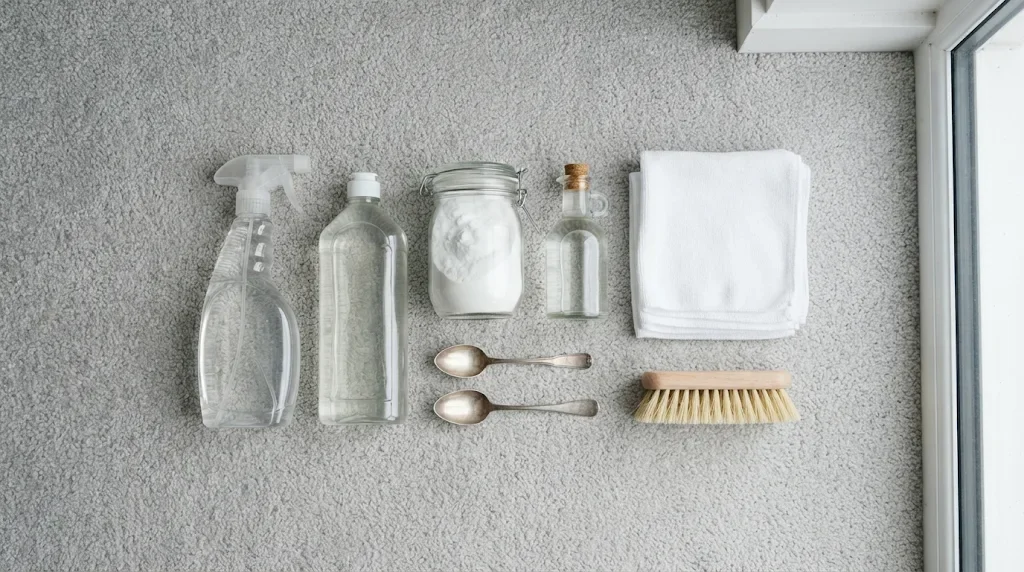
What you’ll need: white cloths or kitchen roll, clear washing-up liquid, white vinegar, bicarbonate of soda, an enzyme cleaner (sold for pet stains), a spray bottle, a spoon or blunt knife, a soft brush and a vacuum.
How to remove carpet stains in 6 steps
This method works on most fresh and many old stains. Check the stain chart below for anything that needs a specific product.
- Remove the excess. Scrape up solids with a spoon, lifting towards the centre. Blot liquids with white kitchen roll, pressing firmly, until nothing more transfers.
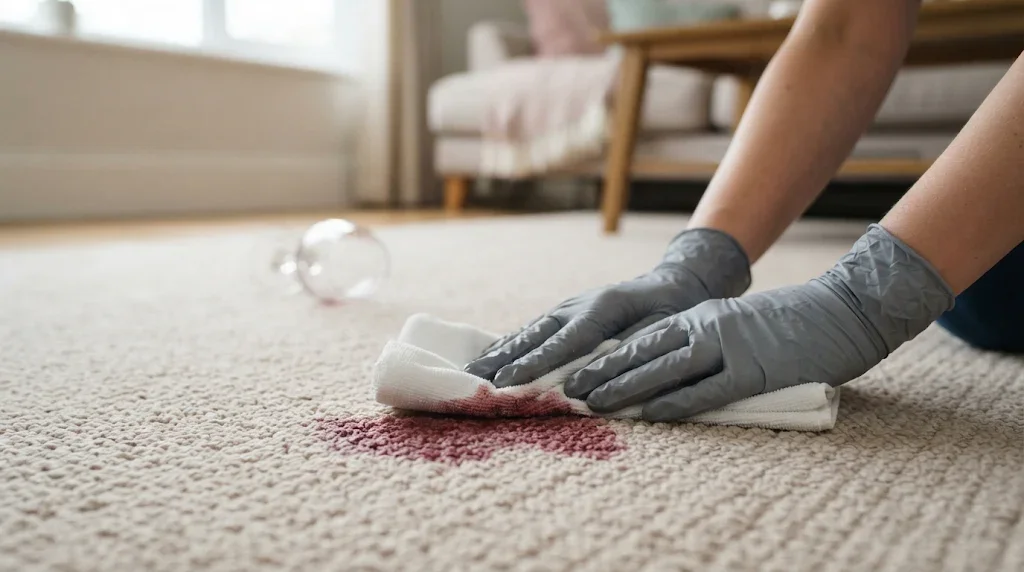
- Blot, never rub. Press a clean white cloth onto the stain from the outside in.
- Patch test your cleaner on a hidden area.
- Apply the right cleaner. For most food and drink, mix 1 teaspoon of clear washing-up liquid into 500ml of lukewarm water. Dab it on with a cloth, or mist it lightly from a spray bottle. Don’t soak the carpet. Leave it for 5 minutes, then blot.
- Rinse-blot with clean water. Dampen a fresh cloth with cool water and blot to lift out the soap. Leftover detergent is sticky and attracts new dirt, which is why some stains seem to come back.
- Dry and lift the pile. Press a dry towel on hard, or stand on it. Then leave a folded towel weighed down with a heavy book for an hour, brush the pile upright and let it air dry.
Carpet stain chart: what to use on each stain
| Stain | What to use | Key tip |
|---|---|---|
| Red wine | Cold water, washing-up liquid, then oxygen stain remover | Blot immediately. Never use salt or white wine |
| Tea and coffee | Washing-up liquid, then 1:2 white vinegar and water | Cool or lukewarm water only |
| Blood | Cold water, then enzyme cleaner | Hot water sets blood permanently |
| Urine (people or pets) | Enzyme cleaner, then bicarbonate of soda | Treat the underlay too, not just the surface |
| Vomit | Scrape, enzyme cleaner, bicarbonate of soda | Bicarb overnight absorbs the smell |
| Grease, oil and butter | Cornflour, then washing-up liquid | Let the powder absorb the oil first |
| Pasta sauce, curry, turmeric | Washing-up liquid, then 3% hydrogen peroxide on light synthetic carpets | Act fast, as turmeric dye sets quickly |
| Ink (biro) | Rubbing alcohol on a cotton bud | Dab, never pour |
| Emulsion paint (wet) | Cold water and washing-up liquid | Dried paint needs a professional |
| Make-up and fake tan | Micellar water, then washing-up liquid | Work from the outside in |
| Mud | Let it dry fully, then vacuum | Wet mud smears; dry mud crumbles out |
| Chewing gum and candle wax | Ice for gum, iron and brown paper for wax | Freeze or melt, never scrub |
How to remove specific carpet stains
How to get red wine out of carpet
Blot up as much as you can straight away with kitchen roll. Pour a little cold water on the stain to dilute it, then blot again. Dab on the washing-up liquid solution, blot, and rinse-blot. For a pink mark that’s left, use an oxygen-based stain remover (one marked safe for carpets) following the label. Skip the old tips: salt can set the colour, and white wine just adds more liquid.
How to get tea and coffee stains out of carpet
Blot, then treat with the washing-up liquid solution. If a brown ring remains, blot with 1 part white vinegar to 2 parts water, leave for 10 minutes, then rinse-blot. Milky coffee also needs the soap step to break down the milk fat, or it can start to smell.
How to get blood out of carpet
Use cold water only, as warm water cooks the protein and fixes the stain. Blot with cold water, then apply an enzyme cleaner and leave it for the time on the label. On light-coloured synthetic carpets, a dab of 3% hydrogen peroxide lifts old blood, but always patch test, as it can lighten dyes.
How to get urine out of carpet (people and pets)
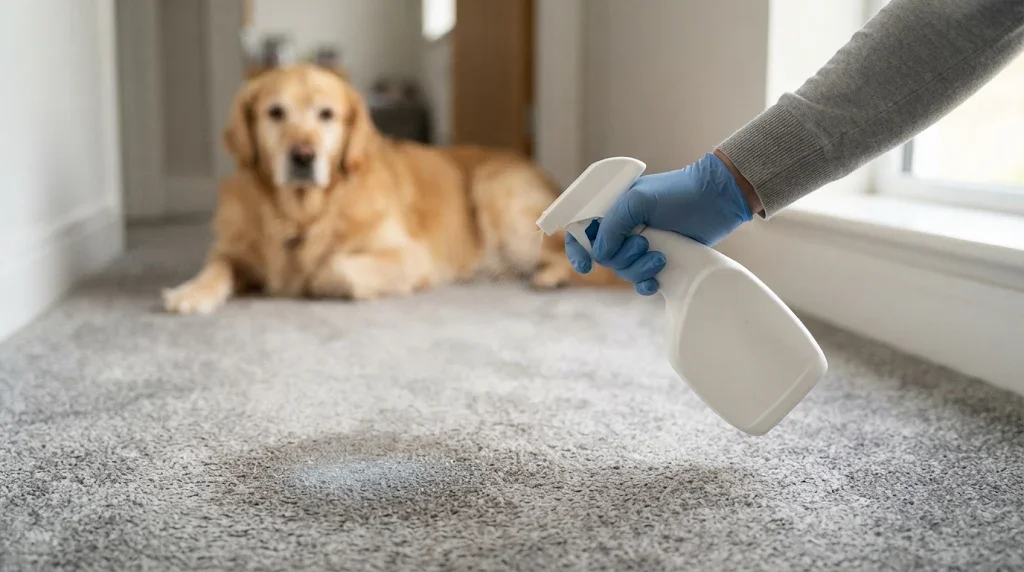
Blot until dry, pressing hard, as urine soaks through to the underlay. Saturate the area with an enzyme cleaner so it reaches as deep as the urine did, and leave it as directed. Enzymes break down the uric acid crystals that cause the smell. Vinegar and household cleaners only mask it. Blot, cover with bicarbonate of soda once just damp, leave overnight and vacuum. If the smell keeps coming back, it’s in the underlay, and hot water extraction is the only reliable fix.
How to get vomit out of carpet
Scrape up solids with a spoon or card. Sprinkle bicarbonate of soda to absorb the liquid for 15 minutes, then vacuum or scoop it up. Apply enzyme cleaner, blot, rinse-blot, then cover with fresh bicarb overnight to remove the smell.
How to get grease and oil out of carpet
Sprinkle cornflour or bicarbonate of soda over the stain and leave it for 30 minutes to soak up the oil. Vacuum it, then blot with the washing-up liquid solution, which is made to cut grease. Rinse-blot and dry.
How to get pasta sauce, curry and turmeric out of carpet
Scrape up the excess, then blot with the washing-up liquid solution. Tomato and turmeric contain strong natural dyes. On light synthetic carpets, a little 3% hydrogen peroxide after a patch test can fade what remains. On wool, call a professional, as peroxide can damage wool fibres.
How to get ink out of carpet
Dab rubbing alcohol (isopropyl) on a cotton bud or white cloth and press it onto the ink. Swap to a clean section as the ink transfers. Then rinse-blot with soapy water and clean water.
How to get paint out of carpet
Water-based emulsion: blot while wet with cold water and washing-up liquid until no colour transfers. Dried emulsion and oil-based paint need specialist solvents that can damage carpet, so we’d recommend a professional.
How to get make-up and fake tan out of carpet
Dab with micellar water on a cotton pad to break down oils and pigment, then blot with the washing-up liquid solution and rinse-blot. Fake tan contains a dye (DHA), so act quickly: it darkens over a few hours.
How to get mud out of carpet
Leave it to dry completely. Wet mud smears into the pile. Once dry, break it up gently with a spoon, vacuum it out, and treat any mark left behind with the washing-up liquid solution.
How to get chewing gum and candle wax out of carpet
Gum: hold an ice cube in a sandwich bag on it until it hardens, then chip it off with a blunt knife. Wax: let it harden and scrape off what you can. Then lay brown paper over it and press with a warm (not hot) iron for a few seconds. The wax melts into the paper. Move to a clean part of the paper and repeat.
How to remove old and set-in carpet stains
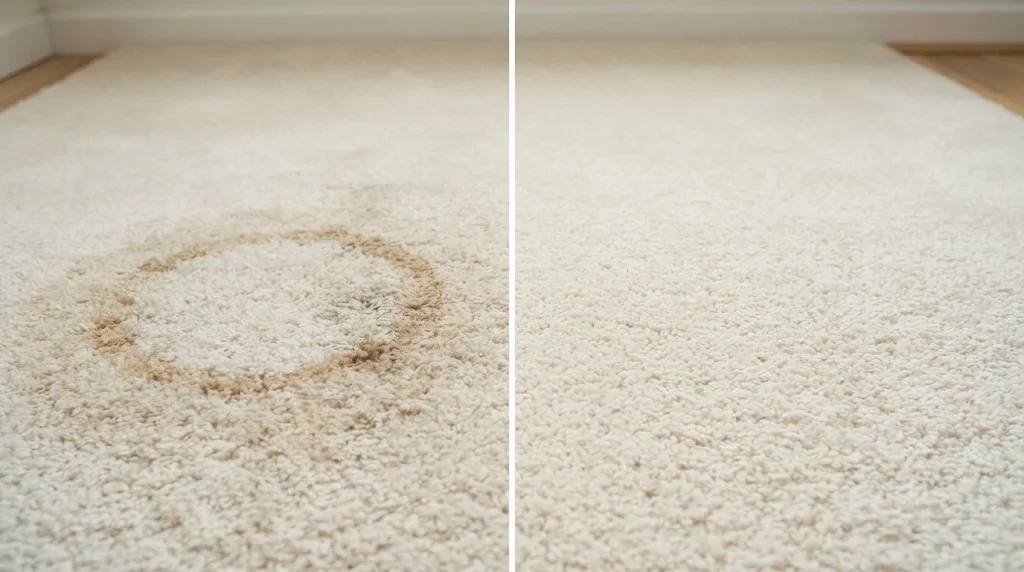
Knowing how to remove carpet stains that have dried in is the real test. Old stains are harder, but not hopeless. The trick is to rehydrate the stain before you treat it:
- Vacuum the area to lift loose dirt.
- Rehydrate with a little lukewarm water and leave it for 5 minutes.
- Apply the washing-up liquid solution (or enzyme cleaner for organic stains) and leave it for 10 to 15 minutes.
- Agitate gently with a soft brush in one direction, then blot.
- Rinse-blot with clean water and dry under a weighted towel.
- Repeat 2 or 3 times. Each round usually lifts more.
Does bicarbonate of soda and vinegar work on carpet stains?
Partly. Mixed together, they neutralise each other: the fizz looks impressive but does little cleaning. Used separately they’re useful. Use the vinegar solution to loosen tea, coffee and odours, then bicarbonate of soda once the area is damp to absorb moisture and smells before you vacuum.
Why we don't recommend bleach on carpet
Some guides suggest diluted bleach for tough stains. We don’t. Bleach can strip the dye from carpet permanently, damages wool and many nylon carpets, and leaves a pale patch that no cleaner can fix. Never mix bleach with vinegar or ammonia either, as it gives off toxic fumes. For light carpets, an oxygen-based stain remover or 3% hydrogen peroxide (after a patch test) is a much safer option.
Check your carpet type first
| Carpet fibre | How to tell | What to watch out for |
|---|---|---|
| Wool and wool blends | Soft, springy, often 80/20 wool. Check the label or offcut | No hydrogen peroxide, ammonia or hot water. Use wool-safe products |
| Nylon | Hard-wearing, common in hallways and stairs | Resists most cleaners but absorbs dyes like wine and turmeric |
| Polyester | Very soft, bright colours | Resists water-based stains but holds onto oil and grease |
| Polypropylene | Budget and loop-pile carpets, rented homes | Tough with most cleaners; oil stains need the grease method |
Not sure? The fitting receipt or an offcut in the loft usually says. If in doubt, treat it as wool and use the gentlest method.
Common carpet stain mistakes
- Rubbing or scrubbing hard
- Using hot water on blood, egg or milk
- Soaking the carpet, which causes brown marks, mould and stains wicking back up
- Leaving soap behind, which attracts new dirt
- Using coloured cloths that transfer dye
- Mixing cleaning products
- Walking on the area before it’s fully dry
Why a stain comes back after cleaning
This is called wicking. Liquid that soaked into the backing rises back up to the surface as the carpet dries. Use less liquid, rinse-blot, and dry the area under a weighted towel overnight so the towel catches the residue instead of the pile.
How to remove carpet stains that won't budge: call a professional
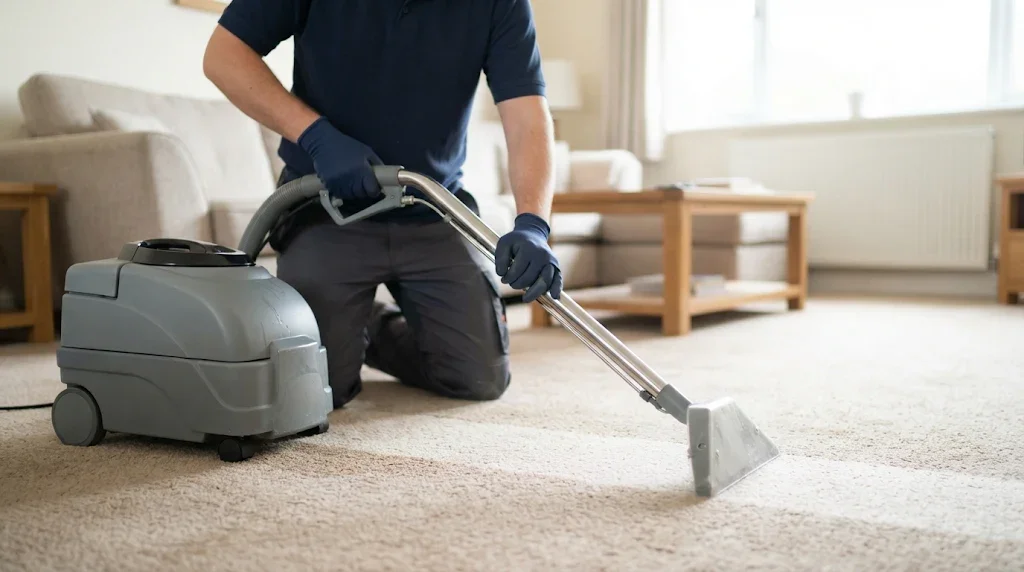
Call in a carpet cleaner if:
- The stain is still there after 2 or 3 attempts
- It’s urine or a smell that keeps returning, as it’s in the underlay
- The carpet is wool, silk or a rug you’re worried about
- There are several stains, or high-traffic areas have gone grey
- You’re moving out and need the carpets right for your inventory check
| DIY | ScrubbyDo carpet cleaning | |
|---|---|---|
| Best for | Fresh spills and small marks | Old, large or repeat stains, smells, end of tenancy |
| Method | Blotting and household products | Stain pre-treatment plus hot water extraction |
| Reaches the underlay | No | Yes |
| Cost | A few pounds in supplies | Lounge £60–£75, hallway from £20, stairs from £40 |
| Drying time | 2–4 hours per patch | Usually 4–6 hours |
Professional carpet stain removal in Essex, Kent and London
ScrubbyDo’s carpet cleaners use professional hot water extraction machines and eco-friendly solutions that are safe for children and pets. Every clean includes stain pre-treatment, deodorising and grooming the pile, and we move light furniture for you.
- Fixed price before we start, no deposit and you pay after the job
- 48-hour re-clean guarantee if anything isn’t right
- Vetted, trained cleaners, available 7 days a week
- Add sofas, rugs or mattress cleaning to the same visit
We’re based in Rayleigh and cover Southend-on-Sea, Leigh-on-Sea, Basildon, Benfleet, Wickford, Chelmsford and the rest of Essex, plus Dartford, Maidstone, Medway and East London. Moving out? Carpet stains are one of the most common deposit deductions, so book carpets with your end of tenancy clean. Tiles need attention too? See our guide on how to clean grout.
Get a free carpet cleaning quote, call 01268 261179, or send a photo of the stain on WhatsApp and we’ll send back a fixed price.
Frequently asked questions
What is the best homemade carpet stain remover?
For most food and drink stains, mix 1 teaspoon of clear washing-up liquid into 500ml of lukewarm water. For older stains and smells, use 1 part white vinegar to 2 parts water. Always blot and patch test first.
How do you get old dried stains out of carpet?
Vacuum, rehydrate the stain with lukewarm water, apply washing-up liquid solution or an enzyme cleaner for 10 to 15 minutes, then blot and rinse-blot. Repeat 2 or 3 times. Very old stains may need professional hot water extraction.
Do bicarbonate of soda and vinegar remove carpet stains?
They help with smells and light marks, but they cancel each other out when mixed. Use them separately: vinegar solution to loosen the stain, then bicarbonate of soda once damp to absorb moisture and odour.
Can you use bleach on carpet?
We don’t recommend it. Bleach can permanently strip the colour and damage wool and many synthetic fibres. Use oxygen-based stain remover or 3% hydrogen peroxide on light carpets after a patch test instead.
Why does a carpet stain come back after cleaning?
This is called wicking. Liquid in the backing rises back up as it dries, or leftover soap attracts dirt. Use less liquid, rinse-blot with clean water and dry under a weighted towel.
How do you get brown stains out of carpet?
Brown marks after cleaning are usually from over-wetting. Blot with 1 part white vinegar to 2 parts water, press dry with towels and dry the area quickly with a fan.
Can all carpet stains be removed?
Most can be removed or greatly reduced. Stains that have changed the dye, such as bleach spots, some hair dye and long-set red wine on wool, may only lighten and need a carpet repair specialist.
How long does carpet take to dry after stain removal?
A spot-cleaned patch usually dries in 2 to 4 hours with good airflow. After a professional hot water extraction clean, carpets typically dry in 4 to 6 hours.
How much does professional carpet stain removal cost in Essex?
ScrubbyDo carpet cleaning for a typical lounge costs £60 to £75 including stain pre-treatment, with hallways from £20 and stairs from £40. You get a fixed price before we start and no deposit.