Quick answer: To clean a mattress, strip and wash all the bedding, vacuum the mattress slowly on every side with an upholstery tool, blot any stains with a little washing-up liquid in cool water (never soak it), then sprinkle bicarbonate of soda over the whole surface, leave it for at least an hour (ideally 8 hours) and vacuum it up. Let the mattress dry and air completely before you put a protector and clean sheets back on.
How often: vacuum every month, deep clean every 6 months, and treat spills straight away.
Your mattress collects sweat, dead skin, dust mites and the odd spilled cup of tea every night, yet most people only ever change the sheets. Our cleaners deep clean mattresses in homes, rented flats, HMOs and Airbnbs across Essex, Kent and London every week, so this guide covers exactly what we do: the full step-by-step method, the right fix for every type of stain, how to clean memory foam safely, and when it is worth calling a professional instead.
Why you should clean your mattress
A mattress cannot go in the washing machine, so whatever soaks through your sheets stays there. Over time that means:
- Dust mites and allergens. Mites feed on dead skin and thrive in warm, humid bedding. Their droppings are a common trigger for sneezing, itchy eyes and asthma symptoms.
- Sweat and body oils. These cause the yellow patches you see on older mattresses and feed the bacteria that make a bed smell stale.
- Moisture and mould. A mattress that never dries out properly, especially on a solid base or against a cold wall, can develop mildew underneath.
- A shorter mattress life. Dirt breaks down fillings and fabric faster, and most manufacturer warranties are void if the mattress is stained.
The last point matters if you rent. In a furnished let, a stained or smelly mattress is one of the items landlords and agents most often deduct for at check-out.
What you need
You probably have most of this at home already:
- Vacuum cleaner with a clean upholstery tool and crevice tool
- Bicarbonate of soda (one 500g box covers a double)
- Mild washing-up liquid or an unscented laundry liquid
- White microfibre cloths (white, so no dye transfers)
- Spray bottle with cool water
- Enzyme cleaner, for urine, sweat, vomit and blood
- 3% hydrogen peroxide, for old blood and yellow stains on white fabric only
- Optional: a few drops of lavender or tea tree oil to scent the bicarb
- A waterproof, breathable mattress protector for afterwards
Signs your mattress needs cleaning
- Yellow or brown patches, or rings left by old spills
- A musty, sweaty or sour smell when you strip the bed
- You wake up sneezing or with a blocked nose that clears during the day
- It has been more than 6 months since it was last cleaned
- You have moved into a rented or furnished property, or someone has been ill
- A pet sleeps on the bed
How to clean a mattress in 8 steps
Step 1. Check the care label
Look at the label on the side of the mattress. Most say to spot clean only, and some memory foam and latex mattresses say no water or steam at all. Follow the label first, as cleaning against it can void the warranty.
Step 2. Strip and wash all the bedding
Take off sheets, pillowcases, duvet cover and the mattress protector. Wash them at 60°C if the care labels allow, as this is hot enough to kill dust mites. Open the window while you work so the room and mattress start to air.
Step 3. Vacuum every surface
Using the upholstery tool, vacuum the top in slow, overlapping strips, then the sides. Use the crevice tool along the seams, piping and around any buttons, where skin and dust collect most. Slow passes pick up far more than fast ones.
Step 4. Spot clean stains
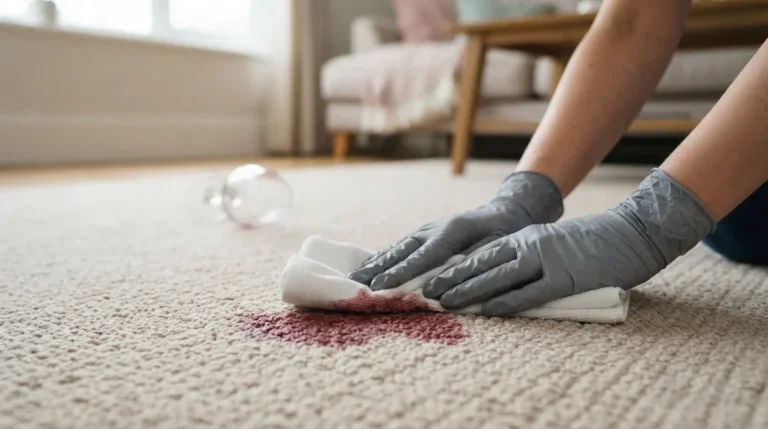
Treat stains before you deodorise. Mix a few drops of washing-up liquid into a cup of cool water, dip a white cloth in, wring it out well and blot the stain from the outside in. Do not rub, as this spreads the stain and pushes it deeper. For stubborn marks, use the stain chart below. Always use as little liquid as possible: a soaked mattress takes days to dry and can go mouldy inside.
Step 5. Deodorise with bicarbonate of soda
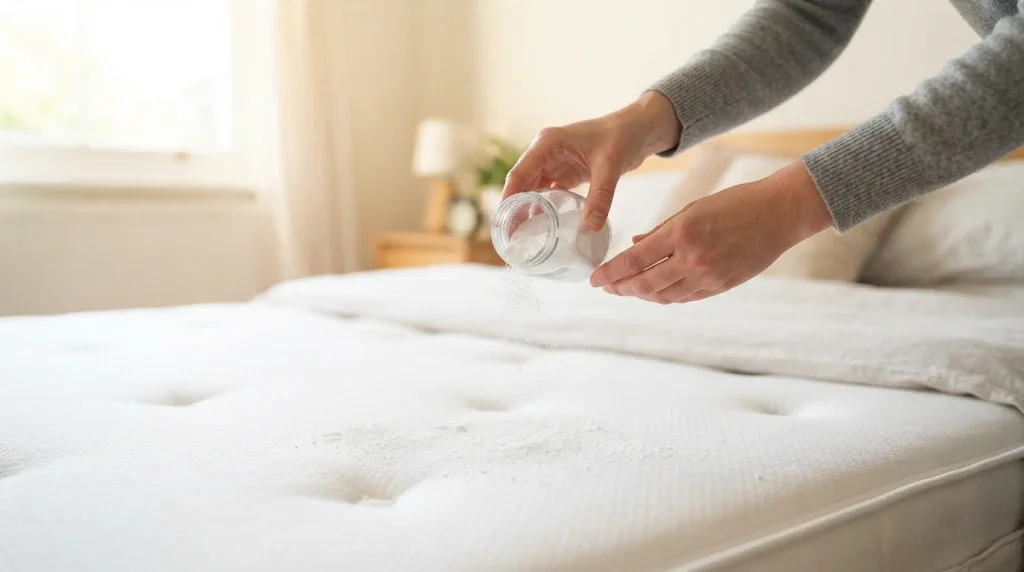
Once any damp patches are dry, sieve a thin, even layer of bicarbonate of soda over the whole mattress. Rub it in lightly with a soft brush. Leave it for at least 1 hour; 8 hours or overnight is best for strong smells. If the room gets sunshine, open the curtains, as sunlight and fresh air help too.
Step 6. Vacuum again
Vacuum up all the bicarbonate slowly, going over the whole surface twice. Empty or check the vacuum afterwards, as the fine powder can clog filters.
Step 7. Flip or rotate and repeat
If your mattress is double sided, flip it and repeat steps 3 to 6 on the other side. If it is one sided (most memory foam, hybrid and pillow-top mattresses), rotate it 180 degrees so the head end is at the foot. Vacuum the bed base or slats while the mattress is off.
Step 8. Air it, protect it and remake the bed
Leave the mattress uncovered with the window open for a few hours. When it is completely dry, fit a breathable waterproof protector and remake the bed with clean bedding. A protector is the single best way to keep it clean from now on.
How to remove mattress stains: stain chart
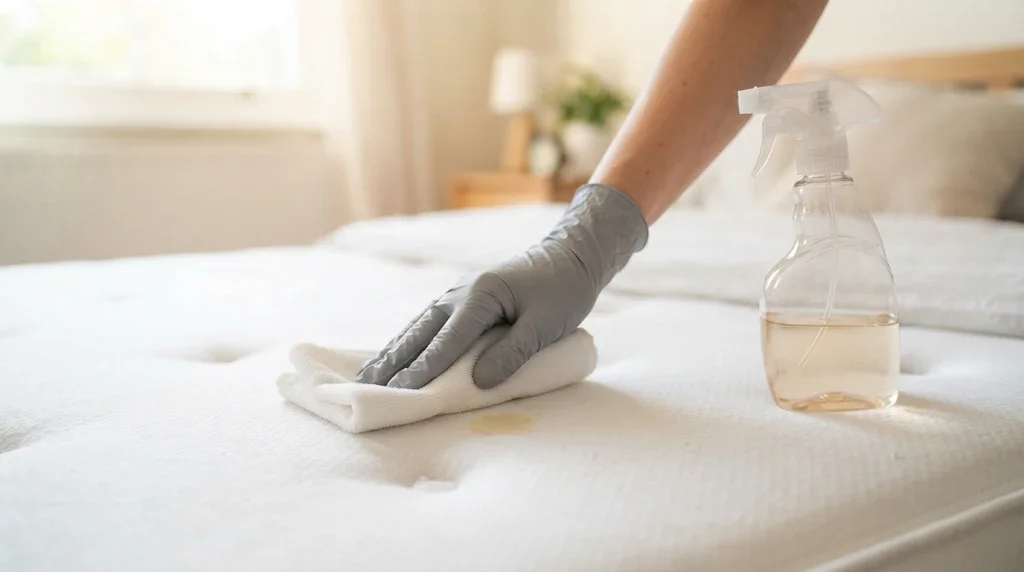
Patch test any product on a hidden area first, such as the side near the foot end. Always blot, never rub, and use cool water, as hot water can set protein stains like blood and sweat.
| Stain | What to use | How to do it |
|---|---|---|
| Sweat and yellow patches | Enzyme cleaner, or 3% hydrogen peroxide on white fabric | Spray lightly, leave 10 to 15 minutes, blot with a damp cloth, then dust with bicarb once dry. |
| Fresh urine | Paper towels, then enzyme cleaner | Blot up as much as possible, apply enzyme cleaner, leave as directed, blot, then bicarb overnight. Full method below. |
| Fresh blood | Cold water and a little washing-up liquid | Blot with cold water only. Hot water cooks the protein and sets the stain. |
| Dried blood | 3% hydrogen peroxide (white fabric only) or enzyme cleaner | Dab on a small amount, let it fizz, blot. Repeat until it lifts, then rinse-blot with cold water. |
| Vomit | Enzyme cleaner and bicarb | Scrape off solids, blot, apply enzyme cleaner, blot, then bicarb overnight to absorb the smell. |
| Tea, coffee or juice | Washing-up liquid in cool water, then 1:1 white vinegar and water | Blot with soapy water, then with the vinegar mix, then plain water. |
| Red wine | Cold water, washing-up liquid, then oxygen-based stain remover | Blot immediately, never rub. Treat the remaining mark with stain remover following the label. |
| Make-up or fake tan | Micellar water or a drop of washing-up liquid | Dab with a cloth, work from the outside in, then rinse-blot. |
| Mould or mildew spots | Specialist advice | Small surface spots can be wiped with a mild solution and fully dried in the sun. If mould is inside the mattress, it is usually time to replace it. |
Never mix cleaning products, especially bleach with vinegar or ammonia, as this gives off toxic fumes. Do not use bleach on a mattress at all.
How to get urine out of a mattress
Urine is the stain we are asked about most, from children, pets and older relatives. Speed matters, because urine soaks into the filling and the smell gets worse as it dries.
- Blot it up straight away. Press dry towels or paper towels firmly on the patch. Keep swapping them until no more moisture comes up.
- Apply an enzyme cleaner. Enzymes break down the uric acid that causes the smell. Spray enough to reach as deep as the urine did, and leave it for the time on the label.
- No enzyme cleaner? Mix 1 part white vinegar with 1 part cool water, spray lightly, leave 10 minutes and blot. Do not use this on top of an enzyme product, as vinegar can stop the enzymes working.
- Cover with bicarbonate of soda. Once it is just damp, cover the patch thickly with bicarb and leave it for 8 hours or overnight.
- Vacuum and air. Vacuum up the powder and let the mattress dry completely with the window open.
Old, dried urine: use the same method but leave the enzyme cleaner longer, and repeat it 2 or 3 times. If the smell keeps coming back, the urine has reached the core of the mattress and a professional hot water extraction clean is the best way to get it out.
How to clean a memory foam mattress
Memory foam acts like a sponge, so it needs a lighter touch than a sprung mattress:
- Use as little liquid as possible. Spray a cloth, not the mattress, and blot.
- No steam and no heat. Steam cleaners and hairdryers on hot can damage foam and break down its structure.
- Do not flip it. Most memory foam mattresses are one sided. Rotate them instead.
- Bicarb is safe. Deodorise and vacuum as normal, using a gentle suction setting.
- Removable cover? Check the label. Many zip-off covers can be washed at 30 to 40°C, but let them dry flat and refit while slightly damp so they do not shrink.
Pocket sprung and hybrid mattresses can take a little more moisture, but the same rule applies: blot, do not soak. Latex should be kept out of direct sunlight, which can make it brittle.
How to deep clean a mattress
A deep clean is the 8-step method above done thoroughly on both sides, plus:
- Leaving the bicarbonate on for a full 8 to 24 hours
- Steam cleaning, but only if the care label allows it and never on memory foam. Keep the steamer moving and hold it slightly above the fabric so you do not soak it.
- Cleaning the bed frame, slats and headboard, and vacuuming under the bed, where dust builds up fast
- Washing pillows and the duvet as well as the covers
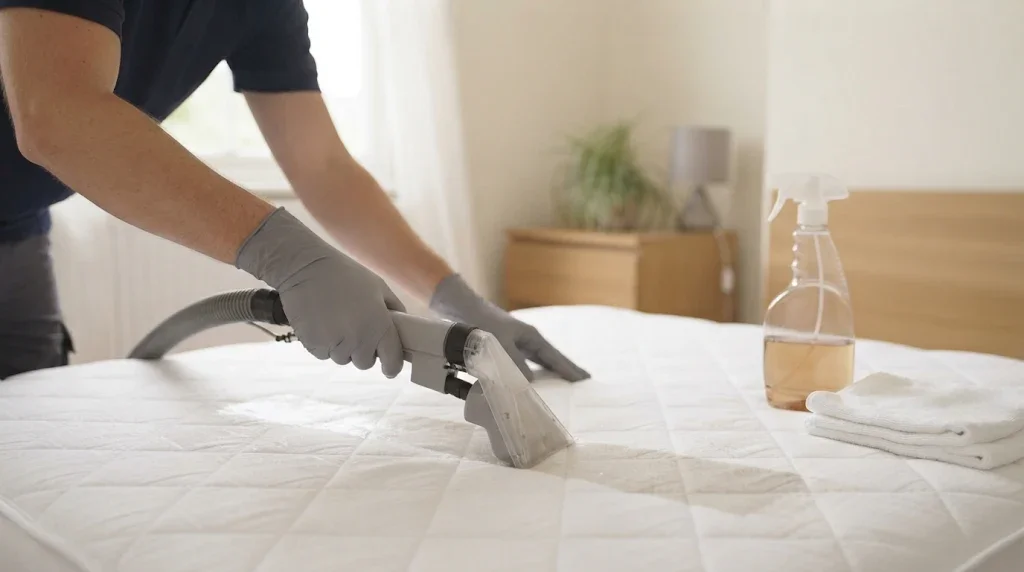
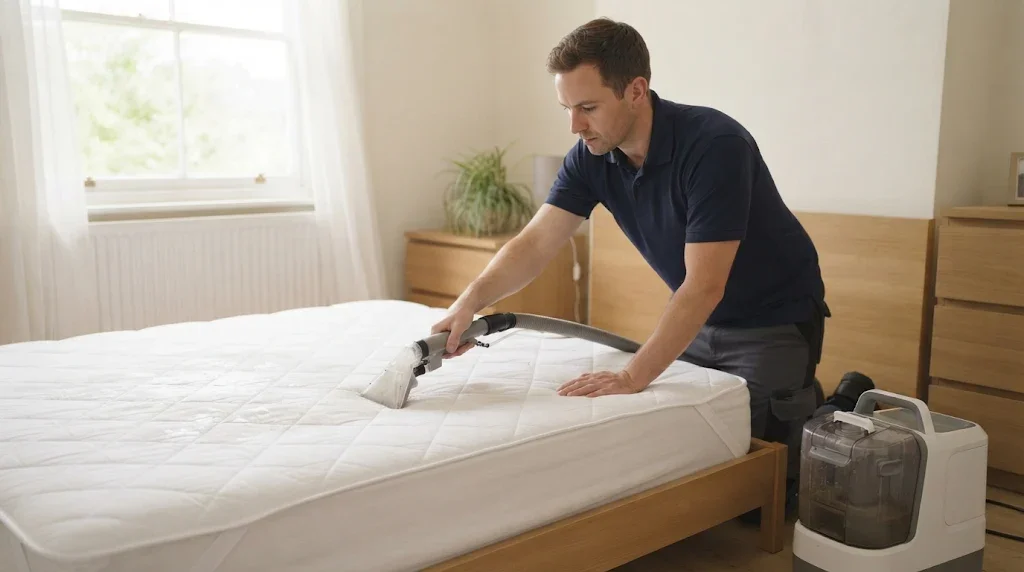
Home steamers and vacuums only reach the surface. To pull out sweat, urine and allergens from deep inside the filling, you need a hot water extraction machine. This is what professional cleaners use: it sprays a cleaning solution into the fabric and immediately sucks it back out with the dirt.
How to dry a mattress quickly
- Open windows and doors to get air moving through the room
- Point a fan across the damp area, or run a dehumidifier in the room
- Stand the mattress on its side if you can, so air reaches both faces
- Put it in direct sunlight on a dry day (not for latex)
- Press dry towels onto damp patches to draw out moisture
- Use a hairdryer on the cool setting only, never hot
Never put sheets back on a damp mattress. Trapped moisture is how mildew starts.
How often should you clean a mattress?
| Task | How often |
|---|---|
| Wash sheets and pillowcases | Every week |
| Wash the mattress protector | Every 1 to 2 months |
| Vacuum the mattress | Every month |
| Rotate or flip | Every 3 months |
| Full clean with bicarbonate of soda | Every 6 months |
| Professional deep clean | Once a year, or when moving in or out |
| Spills and accidents | Straight away |
Clean more often if you have allergies or asthma, pets on the bed, young children, or you sweat a lot at night.
How to keep your mattress clean for longer
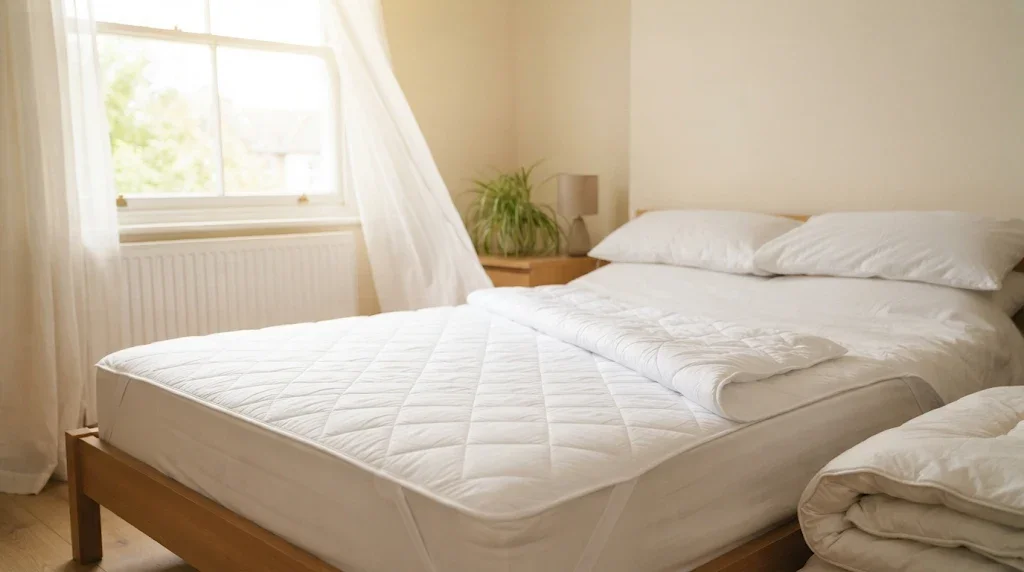
- Always use a mattress protector. A breathable, waterproof one stops sweat and spills reaching the mattress, and it can simply go in the wash.
- Air the bed every morning. Pull the duvet back for 20 to 30 minutes so overnight moisture can escape before you make the bed.
- Keep the bedroom ventilated. Open a window daily, especially in winter when condensation builds up.
- Avoid eating and drinking in bed.
- Keep pets off the bed, or wash the protector more often if they sleep there.
- Shower before bed to cut down on sweat and body oils.
Mattress cleaning mistakes to avoid
- Soaking the mattress or pouring liquid straight onto it
- Rubbing stains, which spreads them and damages the fabric
- Using hot water on blood or sweat, which sets the stain
- Using bleach, or mixing bleach with other cleaners
- Steam cleaning memory foam or ignoring the care label
- Remaking the bed before the mattress is fully dry
- Using a dirty vacuum attachment that puts dust back in
Dust mites and bed bugs
Regular vacuuming, washing bedding at 60°C and using a protector keep dust mites under control. An anti-allergy protector that zips fully around the mattress helps further if someone in the house has allergies.
Bed bugs are different. Signs include small rusty or dark spots on the seams, tiny pale eggs, and itchy bites in lines when you wake up. Cleaning alone will not get rid of them. Contact a pest control service or your local council, and wash all bedding on the hottest setting it can take.
DIY vs professional mattress cleaning
| DIY at home | Professional clean | |
|---|---|---|
| Best for | Routine freshening and fresh spills | Old stains, urine, strong smells, allergies, moving in or out |
| Method | Vacuum, spot clean, bicarbonate of soda | Pre-treatment plus hot water extraction that lifts dirt from inside the filling |
| Time | 2 hours of work, plus 8 hours or more for bicarb and drying | Usually under an hour per mattress, then a few hours to dry |
| Cost | Around £5 to £15 in supplies | ScrubbyDo mattress cleaning from £45 |
| Results | Good on the surface | Deeper clean, better on old and set-in stains |
Professional mattress cleaning in Essex, Kent and London
If DIY has not shifted a stain or smell, or you just want it done properly, ScrubbyDo can help. Our cleaners use professional hot water extraction machines and eco-friendly solutions that are safe for children and pets, the same kit we use for our carpet, sofa and mattress cleaning.
- Mattress cleaning from £45, with fixed prices agreed before we start
- No deposit to pay, and you pay after the job
- 48-hour re-clean guarantee if anything is not right
- Vetted, trained cleaners, available 7 days a week
- Add mattress cleaning to a deep clean, end of tenancy clean, Airbnb turnover or HMO clean
We are based in Rayleigh and cover Southend-on-Sea, Leigh-on-Sea, Basildon, Benfleet, Wickford, Chelmsford, Brentwood and the rest of Essex, plus Dartford, Maidstone, Medway and much of Kent, and East London. Moving out of a furnished let? Read our guide to end of tenancy cleaning prices, or see how much a cleaner costs.
Get a free mattress cleaning quote, call 01268 261179, or send a photo of the stain on WhatsApp for a fixed price.
Frequently asked questions
What is the best way to clean a mattress at home?
Vacuum it thoroughly, blot any stains with a little washing-up liquid in cool water, then cover it with bicarbonate of soda for at least an hour (ideally overnight) and vacuum it off. Let it dry and air fully before putting on a protector and clean sheets.
How long should you leave bicarbonate of soda on a mattress?
At least 1 hour for a light refresh, and 8 to 24 hours for strong smells such as sweat or urine. The longer it sits, the more moisture and odour it absorbs.
How do you get yellow stains out of a mattress?
Yellow stains are usually sweat or old urine. Apply an enzyme cleaner, or 3% hydrogen peroxide on white fabric only after a patch test, leave for 10 to 15 minutes and blot. Very old stains may fade rather than disappear completely, and a professional extraction clean gives the best result.
Can you steam clean a mattress?
Yes, if the care label allows it, but never steam memory foam or latex. Keep the steamer moving, avoid soaking the fabric, and dry the mattress fully afterwards.
Can I clean a mattress with vinegar?
A 1:1 mix of white vinegar and cool water helps with tea, coffee and fresh urine smells. Spray lightly, blot, and let it dry. The vinegar smell goes as it dries. Do not use vinegar together with an enzyme cleaner or bleach.
How long does a mattress take to dry after cleaning?
After spot cleaning, usually 2 to 4 hours in a ventilated room. After a professional hot water extraction clean, typically 4 to 6 hours, depending on airflow and the time of year.
How often should a mattress be cleaned?
Vacuum it monthly, give it a full clean every 6 months, and have it professionally deep cleaned once a year or whenever you move in or out of a property.
How much does professional mattress cleaning cost in Essex?
ScrubbyDo mattress cleaning starts from £45, depending on the size and condition. You get a fixed price before we start, with no deposit.
When should you replace a mattress instead of cleaning it?
Replace it if there is mould inside it, a bed bug infestation that pest control cannot clear, sagging or lumps, or if it is more than 8 to 10 years old and no longer comfortable.